Septic tank cleaning removes the sludge layer, scum layer and effluent from your tank, not just the standing liquid. Most homes need it every 3 to 5 years, depending on tank size and household size. Skip it too long and solids reach the drain field, which turns a $250 job into a much bigger one, the kind covered on our emergency septic service page.
A typical 1,000 gallon residential tank gets pumped every 3 to 5 years, and that interval moves based on tank size and how many people live in the house. A bigger household pushes more solids into the tank each month, so the same tank fills faster and needs cleaning sooner, similar to how a portable toilet rental needs more frequent service with heavier use. Renters and owners in older Santa Cruz neighborhoods with smaller original tanks often land on the shorter end of that range. If you are not sure when your tank was last serviced, that alone is a reason to schedule now rather than guess. Waiting past that window is how solids migrate into the drain field, and that repair costs far more than routine septic pumping service. We track service dates for repeat customers so you are not relying on memory, the same way we log visits for septic pumping service clients across town. If you want the full breakdown on timing by tank and household size, see how often to pump a septic tank. For what a job like this actually costs in Santa Cruz, the septic tank pumping cost page breaks down the range.
Pricing depends on tank access, tank size and how far the truck has to travel within Santa Cruz. Here is the general range for a standard residential visit:
| service | duration | low | typical | high |
|---|---|---|---|---|
| septic pumping | day | $150 | $250 | $300 |
| septic pumping | weekend | $50 | $100 | $150 |
Weekend visits carry a different rate structure than a weekday appointment, so ask when you book if timing matters to you, much like weekend pricing on a standard porta potty rental runs differently than a weekday rate. A grease interceptor is a separate animal from a residential tank. That gets pumped once fats, oils, grease and solids reach 25 percent of the liquid depth, which restaurants and commercial kitchens in Santa Cruz should track on a regular check schedule rather than waiting for a backup. See grease trap pumping for that side of the business. If your property runs on a holding tank instead of a conventional septic system, pricing and frequency work differently, and if you are also budgeting for other site needs, our dumpster rental cost page covers a common companion expense. Check holding tank rental for that setup.
The filter catches solids before they can reach the drain field, and a clogged filter is one of the first things that backs a system up. Cleaning it is part of a full service visit, not an extra step tacked on. Technicians pull the filter, hose it down, and check the baffle while the tank is open anyway, similar to the routine checks we run on a deluxe flushable porta potty between rentals. Skipping this step is how a tank that was "just pumped" ends up with a slow drain three months later. If you are noticing gurgling drains, slow flushes, or standing water near the tank, those are classic septic tank warning signs worth checking before they become an emergency septic service call. Regular filter cleaning stretches the interval between full tank cleanings and protects the leach field, which is the expensive part to repair, the same logic behind scheduling a handwashing station rental on a regular service route. A tank that gets its filter serviced at every visit tends to last longer between full cleanings than one where the filter gets ignored.
Routine pumping and cleaning typically does not require a permit, but placement of equipment, especially if a truck needs to sit in the right of way, is worth confirming with the city before the appointment. We have not verified a specific Santa Cruz ordinance for septic servicing access, so treat that as a question for your service provider rather than an assumption. What matters more on the day of service is clear access: the truck needs a straight path to the tank, and dense landscaping or a locked gate can turn a 30 minute job into an hour, the same clearance concern we flag before a roll-off dumpster rental delivery. If your property also uses portable restrooms during construction or renovation work, note that separate rules apply there, covered on our porta potty permit requirements page.
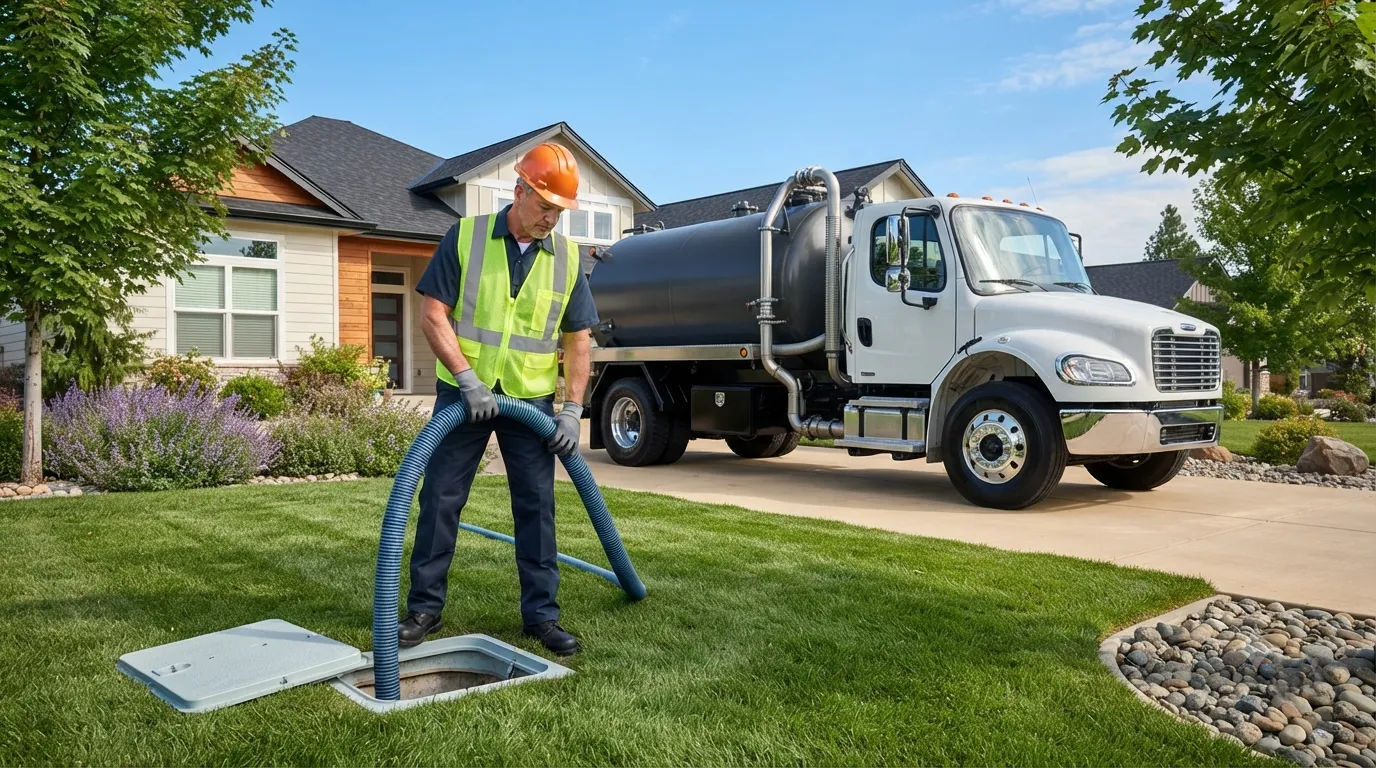
A technician locates the tank, opens the access lid, and pumps out sludge, scum and liquid using a vacuum truck. They then inspect the baffles, check the filter, and note any cracks or signs of a system under strain. This is different from a simple pump-out because cleaning means the tank is scraped and fully emptied, not just partially drained, a distinction worth knowing if you are also comparing options on the porta potty rental cost page. Santa Cruz households on well and septic systems should expect this to take somewhere between 30 minutes and an hour for a typical tank, depending on access and how full it was. If your home in Santa Cruz sits on a hillside lot or has a tank buried under decking, mention that when booking so the crew brings the right hose length, the same detail we ask about before a restroom trailer rental delivery. For properties further out, Watsonville is 17.2 miles east and Scotts Valley sits 6.6 miles north, both within our regular service radius. If you are managing a larger property with multiple systems or you are weighing a construction project that will also need sanitation coverage, our construction site services page covers what pairs well with septic work, including temporary fence rental and storage container rental for the job site itself. For agricultural operations with hand-labor employees, field sanitation requirements under OSHA 1928.110 call for potable water, toilets and handwashing within a quarter mile walk, which is worth knowing if your property doubles as a working farm; see farm and agricultural restrooms for that setup.
Slow drains, gurgling pipes, sewage odor near the tank, or wet spots in the yard above the drain field are the signs to watch. Do not wait for a full backup. If it has been more than 5 years since the last service, or you do not know the last date, book a check now rather than risk a failure.
No. Septic tanks hold sludge and gases that are hazardous, and proper cleaning needs a vacuum truck and licensed disposal, the same reason DIY setups fall short compared to a proper portable restroom rental for a work crew. Attempting it yourself risks contamination and does not meet the standard for solid waste handling that a licensed service follows.
Expect a range depending on access and tank condition, generally between $150 and $300 for a standard day appointment, with weekend service priced differently. Tanks that have not been serviced in years or that require extra digging to reach the lid may run higher, similar to how an ADA accessible porta potty can carry a different rate than a standard unit.
Pumping removes liquid and some solids. Cleaning fully empties and scrapes the tank, including the scum layer stuck to the walls. A full cleaning service typically includes both steps plus a filter check, which is what most residential visits actually deliver.
A grease interceptor needs attention once fats, oils, grease and solids hit 25 percent of the liquid depth, often much sooner than a home tank. A residential septic tank runs on a 3 to 5 year cycle instead, driven by household size rather than kitchen volume.
Yes. Santa Cruz Porta Pros delivers septic tank cleaning across Santa Cruz and the surrounding metro, with same-day and next-day drop-off available on most orders.
Pricing depends on the unit and how long you need it. See our cost breakdown and request a free quote for an exact figure.
Standard rentals include scheduled service — a pump-out, a clean, a restock and fresh deodorizer. Busy or hot-weather sites can be serviced more often.
Call now or request a free quote — clean units, on-time delivery, transparent pricing.